Webinar on the Integrated Media Agreement for Canada (IMAC)

The Integrated Media Agreement for Canada (IMAC) enables and encourages orchestras to create promotional content. This content is generally for distribution on the orchestras’ own platforms, with additional provisions in place for third party distributions.

On February 21, 2023, Richard Sandals covered the promotional provisions of the IMAC in a free webinar, with a particular focus on assisting orchestras in making use of those provisions in their marketing and development activities. You can access a recording of the webinar below, as well as the written guide to the promotional provisions. The guide also includes the relevant sections of the IMAC at the end.

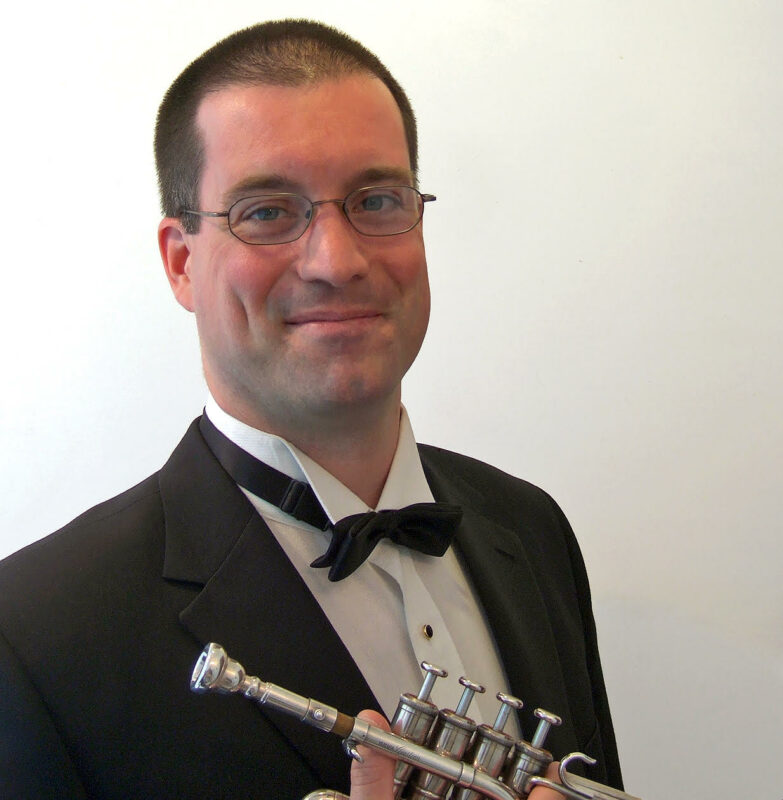
A headshot of Richard Sandals holding a trumpet

Richard Sandals is the Associate Director of the Symphonic Services Division (SSD) of the Canadian Federation of Musicians (CFM). SSD assists locals and orchestra committees in negotiating and administering Collective Agreements and oversees CFM symphonic electronic media agreements.

BIPOC Voices: Repertoire Reports

Association for Opera in Canada and Orchestras Canada are excited to partner with BIPOC Voices on their latest successfully funded project, the Canadian Orchestral and Opera Repertoire Reports.  

What is it? 

The Repertoire Reports will comprise a baseline and longitudinal study of changes and trends in orchestral and operatic program vis a vis works by female-presenting, trans, non-binary, and BIPOC (Black, Indigenous, and People of Colour) composers. BIPOC Voices is also collaborating with the Institute for Composer Diversity on this timely research.

Rich Coburn held a short webinar on February 7th, introducing the project in more detail and explaining the simple steps you can take to support the project and improve the resulting reports. 

What can you do? 

The Data Collection Phase of the reports kicked off this February. We invite you to be a part of creating the first ever Canada-wide reports on how works by how underrepresented composers are programmed, and how that is changing.  

How your data will be used 

There will be two resulting reports; one on our opera companies and one on our orchestras. These reports will measure how underrepresented composers have been programmed across multiple seasons. This anonymized data will be used to measure progress in future seasons.

Submission to the Ontario Standing Committee on Finance and Economic Affairs : February 2023

On behalf of Ontario’s orchestras, Orchestras Canada submitted a brief to the Standing Committee on Finance and Economic Affairs’ 2023 pre-budget consultations. We recommended that the province of Ontario: 

1- Help us bring our audiences back. A short-term program, inspired by a tested and successful model from Quebec (part of the Conseil des Arts et des Lettres du Québec’s Plan de Relance), could offer live arts groups a life-line as they work to bring audiences back

2- Leverage Ontario’s existing and excellent arts investment structures and expertise. Specifically, we requested that the Province of Ontario sustain the Ontario Arts Council’s funding at $65 million for 2023-24

3- Step up investment in cultural infrastructure.

4- Work with the arts and culture sector to envision and deliver on a new role for Ontario’s artists and arts organizations in education.

You can read the full brief here.

Submission to the Department of Finance Canada: Pre-Budget Consultations 2023

Orchestras Canada recently submitted recommendations to the Federal Department of Finance as part of that group’s pre-budget consultation process. In our brief, we thank the government of Canada for their leadership and enhanced support during the COVID-19 pandemic; summarize the situation, contributions and needs of Canadian orchestras during this time of pandemic recovery; and make a case for: 

  • Investing in supplementary federal support to performing arts groups – identified as one of the hardest hit sectors – experiencing a slower-than-expected rebound from pandemic closures.
  • Undertaking, commissioning and funding comprehensive arts and culture sector research, to inform federal policy and funding frameworks and strengthen sector decision- making.
  • Ensuring that the interests of self-employed artists and cultural workers are considered in the design of a modernized Employment Insurance program.
  • Developing a cross-departmental Federal strategy for equitable, long-term social and economic resilience in every community across Canada, including arts and culture as a key contributor.

You can read the complete brief here.


Comparative Report 2021-22


Summary Reports by Budget Size and Regions

Each year for almost half a century, Orchestras Canada has been collecting financial and audience information from member orchestras and producing an annual comparative Report. The detailed Report is shared with participating orchestras and used by OC for advocacy purposes. The 2021-22 Comparative Report contains information from 73 orchestras. It includes all member orchestras with budgets over $1.5 million, and almost all other orchestras which historically have had budgets over $50,000.

The 2021-22 Summaries are compiled using information from the Report. They provide an overview of the Canadian orchestra industry for the 2021-22 season, organized budget size and by regions. Percentages are calculated in two ways: 1) based on the aggregate totals, and 2) “averages-of-percentages” using the individually calculated percentages for each of the participating orchestras. This approach is useful when considering relatively small samples of organizations of disparate sizes and scopes, especially by region.

We continue to report “Cost per audience contact” (CPAC) calculations in the Summaries. In these unprecedented times, the value of this calculation is questionable; even eyebrow-raising. That said: the CPAC is a tool which individual organizations may find useful for assessing business efficiency in their own organization, and we are reporting it to stay consistent with past practice.


Summaries of Summaries-2018-19 to 2021-22by Budget Size and Regions

COVID-19’s dramatic impact on orchestras began in March 2020 with the shutting down of performance venues. Within weeks, many orchestras began pivoting to various forms of online presentation. Not surprisingly, the 2019-20 financial and attendance numbers came in radically below results from the previous (2018-19) season.

2020-21 was fully COVID-affected season. Budgets receded further. The vast majority of orchestras pivoted to online activity almost exclusively. The 2018-19 aggregate live audience of 2,843,000 collapsed to 53,000 in 2020-21: a drop of 98%!

2021-22 indicated significant recovery. The minuscule live audience of 2020-21 rebounded to 1,061,664-still a long way from the pre-COVID 2018-19 audience of almost 3 million.

While these Summaries of Summaries are packed with information, we hesitate to over-analyze. The 2022-23 seasons are already at, or past, their mid points. We already know that numbers for 2022-23 will be significantly different from 2021-22. We look forward to reporting fully on this season in the coming months. We will continue to produce Summaries of Summaries, looking forward to some stability from season to season.

Online activity: In 2018-19, online content sharing by orchestras was a rarity. This changed substantially in 2019-20. In 2020-21 (the season of closed concert halls), online activity blossomed. Excepting a very few small orchestras, every organization had online audiences. In 2021-22, as concert halls re-opened, we saw a reduction in online activity. We will continue to monitor this in 2022-23 and beyond.

As snapshots over time, the Summaries of Summaries are fascinating. In all the years that we have been preparing the Comparative Report and summaries, we never expected to see numbers like this. We commend the Summaries and Summary of Summaries to you for vigorous discussion in your organization.

General disclaimer

We produce these Summaries using straightforward information and commonly accepted definitions, avoiding subjective judgments as much as possible. The accuracy of the Summaries is dependent primarily on the accuracy of information provided by the 73 participating orchestras, followed by accurate transfer of information to master spreadsheets. If significant errors are noticed, we would appreciate knowing.

Respectfully submitted
C Stephen Smith (Statistician, Orchestras Canada)
February 2023

Holiday Repertoire by Canadian Composers

As part of our commitment to promoting Canadian content, we have added a Canadian Holiday Repertoire Library to our website and are inviting you to submit works appropriate for the holiday period, written by Canadian composers. We hope that this collection will grow and make it as easy as possible for music directors and artistic decision-makers to program Canadian content on their holiday concerts. Thank you to the Canadian Music Centre for consulting during the early development of this initiative, and for their ongoing support.

Some tips on using this library:

  • Export the entire library by using the Print (PDF), Excel or Copy buttons at the top of the table.
  • Select which columns are displayed by using the Columns button and toggling them on and off.
  • Filter what kinds of pieces are displayed by using the Duration, Ensemble or Suitability options at the top of the page.
  • Contact us if you have additional questions about how to use this library

Performing Arts in Canada: What Are Audiences Telling Us?

Performing arts groups are working to find a new equilibrium in this post-pandemic era, balancing a joyous return to live performance with challenging economic realities. Yet audiences are still not beating a path to our doors. Is it just a matter of time, or do we need to make significant changes to re-connect with existing audiences – and build connections with new ones? 

On November 25, 2022, we invited experts who have tracked arts and culture consumer attitudes and perspectives since very early in the pandemic to share insights on ever-evolving patron attitudes, and how we might best respond to what patrons are telling us. 

This is the second of a 2-webinar series. For resources from the first webinar, titled “Performing Arts in Canada: Where are the audiences”, click here. 

Presenters 

  • Alan Brown, Managing Principal, Wolf Brown 
  • Emilie BossardNanos Research Group  
  • Elise Boileau, Evidence and Insight Researcher, and Oliver Mantell, Director of Evidence and Insight, The Audience Agency  
  • Host: Dr. Taiwo Afolabi, Canada Research Chair in Socially Engaged Theatre; Director, Centre for Socially Engaged Theatre (C-SET), Assistant Professor, University of Regina 

Resources

???? Recording
English Recording
French Recording

???? Slide decks
• Elise Boileau and Oliver Mantell, The Audience Agency slide deck:
English slides
French slides

• Emilie Bossard, Nanos Research Group slide deck:
English slides
French slides

• Alan Brown, Wolf Brown slide deck:
English slides
French slides

Co-presenters

Research and Funders 

Performing Arts in Canada: Where Are The Audiences?

Lockdowns are behind us, mask mandates have been dropped, social distancing is no longer required, and the doors of concert halls and theatres in Canada are wide open. And yet in many venues, ticket sales are not picking up. What is going on?

On November 16, 2022, we co-presented a webinar on exactly that! We invited experts from Canada and the United States to share insights on box office data in the performing arts and provide some clarity on some of the burning questions on everyone’s mind: Where are our audiences? How do we bring them back?

Presenters

  • Eric Nelson, Client Engagement Officer, TRG Arts
  • William César Lareau, Synapse C
  • Benjamin Broucke, Project Executive, Tourism, Heritage and Culture, Government of New Brunswick
  • Facilitator, Frédéric Julien, Director of Research of Development, CAPACOA

Resources: 

???? Recording
English Recording
French Recording

???? Slide decks
• Eric Nelson, Client Engagement Officer, TRG Arts’s presentation:
English slides
French slides

• Benjamin Broucke, Project Executive, Tourism, Heritage and Culture, Government of New Brunswick’s presentation:
Bilingual slides

• William César Lareau, Synapse C’s presentation:
English slides
French slides


Co-presenters

Submission to the Standing Committee on Finance: 2022 Pre-Budget Consultation

Orchestra Canada horizontal Logo

As is our custom, Orchestras Canada recently submitted recommendations to the Federal Standing Committee on Finance as part of that group’s pre-budget consultation process. In our brief, we thank the government of Canada for their rapid response to our sector at the height of the pandemic; summarize the situation, contributions and needs of Canadian orchestras during this time of pandemic recovery; and make the case for  

  • The funding, rapid design and delivery of targeted 3-year supplementary investments in sector recovery, in acknowledgment that rebuilding performing arts audiences to pre-pandemic levels and beyond will be a multi-year process. 
  • The commissioning and funding of rolling benchmark research on the state of the arts and culture sector, to shape better and more responsive cultural policy and funding in future.  
  • Ensuring that the proposed modernization of the Employment Insurance program considers the interests of arts and culture organizations and self-employed artists and cultural workers in the design of the new program. 

You can read the complete brief here.


Innovation and Resilience in the Arts, Culture and Heritage

Many of us disconnect when the word “innovation” is uttered: we’ve pivoted repeatedly throughout the pandemic, and we’re tired! At the same time, we all know that genuine innovation – informed by experience, insight, and analysis – is key to our sector’s recovery.

Kelly Hill of Hill Strategies Research presented a webinar on Wednesday, September 28, 2:00-3:00pm ET on the findings of the Innovation and Resilience in the Arts, Culture and Heritage* project (research report here).  

If you are looking to re-connect with “innovation”, we invite you to take inspiration from the work that Kelly and colleagues have done to document and analyze arts sector breakthroughs both large and small.

???? View the slide deck here

???? View the recording in English or in French 

*For more information about the project, visit the Hill Strategies website https://hillstrategies.com/about-the-resilience-project/ 

Orchestras Canada thanks the Creative Cities Network of Canada (which commissioned the original research) and all of the partners, story-seekers, artists and organizations who took part. We are grateful for the opportunity to share the research findings with the broader community.

With generous funding from Canada Council for the Arts and the Ontario Arts Council.

Logo, Canada Council for the Arts logo

Ontario Arts council Logo